


The days when a good salary alone was enough to attract and retain top talent are definitely over. Today, skilled workers are looking for more than just a job; they are looking for an employer that offers flexibility, personal development and, above all, a sense of purpose. Sustainable
Innovative approaches such as ESG-based benefits (environmental, social and corporate governance) and automated CSR programs are coming into focus. They directly address the desire for value-oriented work and make sustainability tangible. In order to measure and continuously improve the success of such strategies, experts emphasize the importance of employee sentiment barometers and employee motivation surveys, as they provide essential insights.
In this article, we present eight concrete and future-oriented measures. These go beyond the usual and help you to build a team that is not only committed and motivated, but also loyal and authentically supports your corporate values.
1. flexible working models: trust as the new currency
Flexible working models are one of the most effective measures for employee retention because they are based on a fundamental principle: Trust. Instead of controlling attendance, the focus is on results. This approach goes far beyond the classic home office and includes a variety of models that are tailored to the individual needs of employees.
Implementation signals that a company regards its employees as responsible partners who can organize their work independently. This not only promotes work-life balance, but also demonstrably increases motivation and satisfaction. Companies such as SAP, Siemens and Microsoft Germany have recognized that this autonomy leads to higher productivity and less stress.
How to successfully implement flexible working models
The introduction requires more than just a guideline. It needs a clear strategy and the right tools.
- Define the framework: Determine which models are possible. Examples include hybrid models (e.g. 2-3 days remotely), trust-based working hours, a 4-day week or job sharing.
- Create the technical prerequisites: Invest in a reliable IT infrastructure, collaboration tools (such as Slack, Teams) and secure cloud solutions.
- Focus on results: Establish clear, measurable key performance indicators (KPIs) that are based on targets rather than man-hours.
- Cultivate the team culture: Promote cohesion through regular virtual check-ins, digital team-building events and transparent communication channels.
Expert insight: The real strength of flexible models lies not in location independence, but in asynchrony. Employees can use their most productive phases, which maximizes efficiency and strengthens loyalty. Companies like Buffer and GitLab are pioneers in this area and prove that global, decentralized teams can be extremely successful.
2. competitive remuneration: more than just a salary
Competitive remuneration is one of the most fundamental measures for employee retention, as it expresses the appreciation for the work performed directly in monetary terms. However, a modern remuneration strategy goes far beyond the basic salary. It includes a holistic package of bonuses, share options, comprehensive health benefits and attractive fringe benefits that convey the feeling of being fair and recognized.
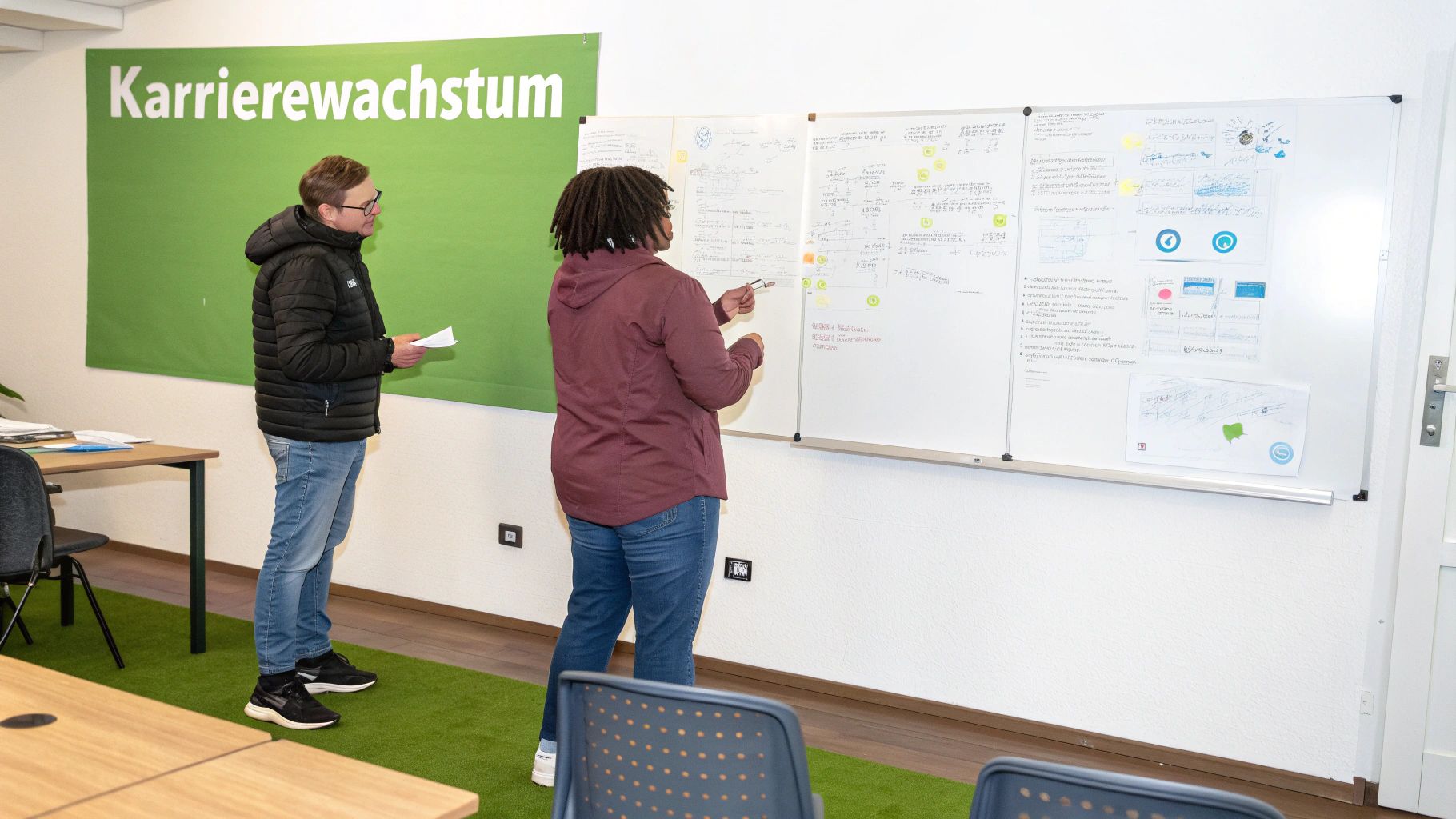
This approach shows that a company is willing to invest in the well-being and financial security of its employees. Companies such as Salesforce, which is committed to equal pay, or BMW, which offers profit-sharing and extensive health benefits, demonstrate how such an overall package strengthens loyalty. Investing in the professional development of employees is also a key element, as this shows appreciation and offers prospects, as the focus on employee development at Luths Services underlines.
How to successfully implement competitive remuneration
An attractive remuneration package requires strategic planning based on market data and transparency.
- Carry out market analyses: Use regular salary surveys and benchmarks to ensure that your salaries are in line with the industry and location.
- Implement transparent salary bands: Define and communicate clear salary structures. This creates fairness and prevents inequalities, which Salesforce actively combats.
- Offer flexible benefit packages: Allow employees to choose from various additional benefits (e.g. mobility budget, healthcare, childcare) to suit their life situation.
- Communicate the total value: Make the total compensation value transparent. Show what the total package including salary, bonuses, social benefits and perks is worth.
Expert insight: The psychology of remuneration is crucial. It’s not just about the absolute amount, but the feeling of fairness and recognition. Companies like Netflix cultivate a culture of top performance and top pay, while Costco deliberately focuses on high employee retention and low turnover with above-average salaries. This approach proves that strategic investments in salaries are profitable in the long term.
3. professional development: Investing in a shared future
Strategic personnel development is one of the most sustainable measures for employee retention. It goes far beyond occasional training courses and signals that a company is investing in the potential and future of its employees. A clearly defined career path and targeted training opportunities show appreciation and create prospects that far outweigh short-term incentives.
This approach transforms employees from mere service providers into strategic partners whose growth contributes directly to the company’s success. Companies such as Bosch, which invests over 180 million euros a year in the training of its workforce, or Procter & Gamble with its strong “promote-from-within” philosophy, prove that this strategy promotes loyalty and top performance. The result is a win-win situation: the company secures highly qualified specialists, while employees can achieve their career goals.

How to successfully implement professional development programs
An effective development program requires a structured and personalized approach.
- Create individual development plans: Hold regular career discussions to align personal goals and company requirements. Define concrete next steps together.
- Establish mentoring programs: Connect experienced managers with up-and-coming talent. The transfer of knowledge and personal support are invaluable.
- Offer cross-functional insights: Encourage job rotation or collaboration on cross-departmental projects to strengthen understanding of the overall organization and build new skills.
- Support external training: Subsidize certifications, professional conferences or degree programs that are relevant to the role and company goals. This not only shows trust, but also brings fresh knowledge into the company.
Expert insight: The most effective development programs are not standardized, but adaptive. They combine formal learning (seminars, e-learning) with informal learning in the workplace (projects, feedback). Companies like IBM have created a culture of continuous learning, where development is a daily process and not a one-off event. This strengthens the agility and loyalty of employees in the long term.
4. employee recognition: systematically anchoring appreciation
Employee recognition programs are systematic employee retention measures that go far beyond spontaneous praise. They formalize appreciation and make it an integral part of the corporate culture. The aim is to specifically recognize outstanding performance, special behaviour or contributions that contribute to the company values. This can be done through formal awards, peer-to-peer recognition systems or a combination of monetary and non-monetary incentives.
The key lies in regularity and transparency. A well-thought-out recognition program shows employees that their work is seen and appreciated, which has a direct impact on motivation, commitment and loyalty. Companies such as Lufthansa with its long-service anniversaries and peer nominations or Zalando with regular team celebrations prove that systematic recognition promotes a culture of excellence and strengthens loyalty to the company. Find out more about the direct link between employee appreciation and company growth.

How to successfully design recognition programs
An effective program needs clear rules and authenticity in order to be fully effective.
- Define clear criteria: Specify transparently which achievements and behaviors are recognized. This ensures fairness and traceability throughout the company.
- Combine incentives: Mix monetary rewards (e.g. bonuses, vouchers) with non-monetary incentives such as additional vacation days, personal development opportunities or public thanks.
- Enable peer-to-peer recognition: Implement tools (e.g. via Slack integrations or dedicated platforms) that allow colleagues to appreciate each other in an uncomplicated and visible way.
- Act promptly and specifically: Recognition should be given as soon as possible after the service has been provided. Always give specific reasons why the performance was exceptional.
Expert insight: The most impactful recognition is tied to company values. When an employee is recognized for behavior that embodies a core value such as “customer focus” or “sustainability”, not only is the person recognized, but the entire culture is strengthened. Companies such as Starbucks with their “Partner of the Quarter” awards do exactly that and anchor their values in their daily actions.
5 A strong corporate culture: the foundation of belonging
An authentic and active corporate culture is one of the most sustainable measures for employee retention. It goes far beyond fruit baskets and table football and creates an environment in which shared values, a clear mission and a strong sense of togetherness characterize everyday working life. A positive culture is the foundation on which trust, commitment and loyalty thrive.
When employees identify with the values and mission of their employer, an emotional connection is created that goes far beyond the salary. They not only understand
How to specifically promote a strong corporate culture
Building a vibrant culture is a continuous process that requires conscious action and clear communication.
- Define and communicate values: Formulate clear, authentic corporate values. Integrate these visibly into all processes, from recruiting and onboarding to performance appraisals.
- Managers as role models: The culture is exemplified by the management level. Managers must embody the values in their decisions and behavior on a daily basis.
- Create open feedback channels: Establish regular surveys, anonymous feedback tools and open discussion groups to take the cultural pulse of the company and continuously improve.
- Celebrate successes and rituals: Acknowledge behaviors and successes that reinforce your culture. Shared rituals, such as team lunches or celebrating milestones, strengthen cohesion. Find out more about how you can build a sustainable corporate culture.
Expert insight: A truly strong culture doesn’t show itself when the sun is shining, but in times of crisis. Companies that live their values consistently, even when making difficult decisions, demonstrate credibility. This consistency creates a deep trust that binds employees to the company even through uncertain phases and strengthens their resilience.
6. leadership quality: managers as the most important pillar of employee retention
One of the central but often underestimated measures for employee retention is the quality of direct managers. Studies have shown time and again that employees don’t leave companies, they leave their managers. A strong manager does not act as a controller, but as a coach, mentor and supporter who recognizes the potential of their team and promotes it in a targeted manner.
Investing in the development of leadership skills is therefore a direct investment in the stability and satisfaction of the workforce. When managers learn to communicate effectively, give constructive feedback and create an environment of psychological safety, a culture is created in which employees feel valued and supported. Companies like Unilever with its focus on purpose-driven leadership or General Electric’s legendary management training programs prove that excellent leadership has a measurable positive impact on employee turnover.
How to systematically develop leadership quality
Good leadership is not an innate quality, but a skill that can be learned. A strategic approach is critical to making leaders the most important allies of your retention strategy.
- Invest in comprehensive leadership training: train your managers in modern leadership methods such as servant leadership, coaching techniques and dealing with hybrid teams.
- Implement 360-degree feedback: Give managers a clear picture of their strengths and areas for development through anonymized feedback from superiors, colleagues and team members.
- Create clear accountability: anchor key figures on employee satisfaction and turnover in your managers’ objectives. This turns employee retention into a measurable management task.
- Promote internal careers: Give preference to filling management positions with internal talent. This not only motivates the people promoted, but also sends a strong signal to the entire workforce.
Expert insight: The role of a manager is fundamentally changing from task distributor to creator of meaning. Jack Welch, former CEO of GE, revolutionized the understanding of leadership by obliging managers to identify and promote the best 20 percent of their teams. Today, it goes one step further: managers must understand the individual strengths and motivators of each team member and link their work to the overarching purpose of the company. This creates an emotional bond that goes far beyond salary.
7 Real work-life balance: more than just a buzzword
A healthy work-life balance is not just a benefit, but one of the most fundamental measures for employee retention that directly influences well-being and performance. It goes far beyond the mere separation of work and leisure and includes programs that actively support employees in reconciling their professional and private responsibilities. This is a key factor in preventing burnout and creating a sustainably positive working environment.
Promoting a real balance signals appreciation and respect for employees’ lives outside the office. Companies such as SAP with its comprehensive mental health programs or Audi with its company health offerings show that investing in the well-being of the workforce has a direct impact on loyalty and productivity. Such measures strengthen the employer brand and make a company an attractive place for top talent.
How to successfully implement a supportive work-life balance
Implementation requires a culture of trust and proactive support from management. It is about creating the right framework conditions.
- Identify needs and diversify offerings: Conduct employee surveys to understand specific needs. Based on this, offer a mix of wellness programs, flexible leave arrangements (e.g. sabbaticals) and mental health resources.
- Establish managers as role models: Train managers to pay attention to the workload of their teams, encourage breaks and set an example of a healthy balance themselves.
- Create family-friendly guidelines: Implement flexible working hours for parents, offer childcare support or allow uncomplicated time off for family emergencies.
- Define clear boundaries: Establish an after-work unavailability policy to protect mental regeneration and prevent constant availability.
Expert insight: The greatest leverage lies not in individual programs, but in creating a culture that promotes psychological safety. When employees can talk about their stress without fear of negative consequences and experience support, a deep bond is created. Companies like Patagonia exemplify this by holistically integrating and promoting work and private life.
8. employee engagement: participation as a driver of identification
Systematic employee engagement is a key measure for employee retention, as it turns employees from passive recipients into active creators. It is about giving employees a voice and involving them in entrepreneurial processes in a targeted manner. This approach transforms the working relationship: instead of mere fulfillment of duties, a deeper identification with the company’s goals and values is created.
When employees feel that their opinion counts and their contribution is valued, psychological ownership is created. They feel responsible for the shared success. Companies such as Deutsche Telekom with its innovation competitions or Henkel with its Employee Resource Groups show how active participation not only increases satisfaction, but also strengthens innovation and problem-solving skills throughout the company.
How to successfully promote genuine employee engagement
Participation must be authentic and structured in order to be effective. It requires open channels and a clear commitment from management.
- Conduct regular engagement surveys: Use tools to gather anonymized and honest feedback on topics such as leadership, culture and workload. It is important to communicate the results transparently and derive visible measures.
- Create a variety of feedback channels: In addition to surveys, implement digital idea boxes, regular “Ask Me Anything” sessions with management or open office hours to cover different preferences.
- Involve employees in decisions: Involve teams in processes that affect their direct work area, be it the selection of new software, the design of office space or the optimization of work processes.
- Establish employee resource groups (ERGs): Encourage employee-led groups on topics such as sustainability, diversity or training. These ERGs strengthen the sense of community and drive important initiatives from within.
Expert insight: The biggest lever for engagement is not the one-off survey, but the visible response to feedback. Companies that consistently close the cycle of “listening, understanding, acting and communicating” signal the highest level of appreciation. Initiatives such as Google’s “20% Project”, in which employees can use some of their time for their own projects, are a prime example of how trust in personal initiative leads to ground-breaking innovations.
Employee retention measures in comparison
| Strategy | ? Implementation complexity | ? Resource requirements | ? Expected results | ? Ideal use cases | ? Conclusive advantages |
|---|---|---|---|---|---|
| Flexible working models | Medium – Requires technology & communication | Medium – IT infrastructure & management expenses | Improved work-life balance, productivity | Companies with diverse employee needs | Higher employee satisfaction, broad talent pool |
| Competitive remuneration | High – Complex administration & budgeting | High – Financial investments | Higher motivation, lower fluctuation | Companies competing for top talent | Talent acquisition, strong employer brand |
| Professional development | High – Long-term planning and programs | High – time and cost expenditure | Improvement of skills, employee retention | Company with a focus on growth and development | Higher employee retention, succession planning |
| Employee recognition | Medium – Regular programs and communication | Resources – personnel deployment and administration | Increasing motivation and corporate culture | Teams in need of motivation and appreciation | Positive work culture, cost-efficient retention |
| Corporate culture | High – Continuous development process | Medium – Leadership engagement and communication | Stronger employee loyalty, better collaboration | Organizations with long-term values | Better team cohesion, fewer conflicts |
| Leadership quality | High – Comprehensive training and feedback systems | High – Time and cost intensive | Better team performance, lower fluctuation | Company with high management standards | Effective leadership, improved employee relations |
| Work-life balance | Medium – Need for cultural change and programs | Funds – Programs and resources | Less burnout, greater satisfaction | Organizations with a focus on health and balance | Higher productivity, lower sickness rate |
| Employee commitment | Medium – Requires structured processes | Medium – Moderation and tools | Greater ability to innovate, satisfaction | Companies with a participative corporate culture | Better decisions, stronger employee loyalty |
Conclusion: Employee retention is a journey, not a destination
The employee retention measures presented in this article paint a clear picture: securing and motivating top talent is not a one-off project, but an ongoing, strategic process. From flexible working models and competitive remuneration to a strong, values-based corporate culture – the most effective approaches are always a tailored mix that is precisely tailored to your company, your industry and the needs of your employees.
The common thread that connects all successful strategies is authenticity. Your efforts must be genuine and deeply embedded in your DNA. A fruit basket alone will not create loyalty if the leadership culture is toxic. A bonus loses its luster if the daily work is perceived as meaningless. Genuine employee loyalty is created where appreciation is not only expressed, but lived.
The most important findings at a glance
- Individualization is key: one-size-fits-all solutions are outdated. Successful companies understand the individual needs of their employees and offer tailor-made solutions, be it in terms of working hours or personal development.
- Meaningfulness as a currency: For younger generations in particular, but increasingly for all employees, the meaningfulness of their work is crucial. The opportunity to make a positive contribution is an invaluable motivating factor.
- Leadership as a foundation: No employee retention measure can compensate for weak leadership. Managers are the direct architects of everyday working life and therefore the decisive lever for satisfaction and loyalty.
- Sustainability as a link: The integration of ESG-compliant goals and tangible impact projects is more than just a trend. It offers a unique opportunity to engage employees on a deeper, emotional level and create a shared mission.
Your next steps towards sustainable employee retention
The path to stronger employee retention starts today. Instead of trying to implement all the measures presented here at once, we recommend a focused approach. Start with an honest assessment: where do you really stand? Conduct anonymous surveys, talk openly with your teams and identify the most urgent areas for action.
Then select one or two initiatives that promise the greatest positive effect and fit in with your corporate culture. Plan the implementation carefully, communicate transparently and measure the results. Whether you start by focusing on improving work-life balance or introducing a new, meaningful benefits program, every step counts. By consistently investing in your employees, you are investing directly in the resilience and future success of your entire company.
Would you like to implement an authentic and effective employee engagement measure that supports your ESG goals and does not require any internal effort? With