


UN Report 2026: Nature restoration underway across an area more than seven times the size of Germany
What the first global UN progress report means for businesses
-
Chris Kaiser
- 16/11/2026
Worldwide, 252 million hectares of nature are under restoration. That is more than seven times the size of Germany and the largest effort ever documented.
This is shown by the first global UN progress report on ecosystem restoration, published in October 2026.
The movement is real. It is already creating more than 1 million green jobs.
To reach the 2030 targets, the pace must triple. Businesses currently provide 27% of the funding. The report calls for this share to be increased significantly.
No time to read, but need to act?
Table of contents
What is the Restoration Progress Report 2026?
The “Restoration Progress Report: Nature’s comeback” is the first comprehensive global stocktake of ecosystem restoration.
It is published by three UN institutions: the Food and Agriculture Organization (FAO), the UN Environment Programme (UNEP), and the Secretariat of the Convention on Biological Diversity (CBD).
The report is released at the midpoint of the UN Decade on Ecosystem Restoration (2021 to 2030). It answers two questions:
- How far has the world come in restoring degraded nature?
- What needs to happen to speed things up?
The data comes from countries’ national reports and from FERM, the official monitoring platform of the UN Decade. We also provided data from our projects for the report.
The benchmark is Target 2 of the Kunming-Montreal Global Biodiversity Framework: by 2030, 30% of all degraded ecosystems on land, in freshwater, and in the ocean are to be under effective restoration.
You can find the full report at FAO: Restoration Progress Report 2026.
Key figures from the UN report at a glance
252 million hectares under restoration, over 1 million green jobs, and a funding gap that businesses can help close.
| Metric | Value |
|---|---|
| Area under restoration (2026) | 252 million hectares |
| Area pledged by countries | around 1 billion hectares |
| Implemented | 25% |
| Acceleration needed by 2030 | 3x pace |
| Green jobs from UN flagship projects | over 1 million |
| Potential new jobs by 2030 | over 32 million |
| Funding today | USD 64 billion per year |
| Funding needed by 2030 | USD 296 billion per year |
| Private-sector share | 27% (USD 17 billion) |
Source: FAO, UNEP and SCBD (2026), Restoration Progress Report: Nature’s comeback. Financial figures refer to 2022.
What good news does the report contain?
Nature is coming back—at a pace never seen before.
Record area under restoration
252 million hectares are documented as under restoration. That is more than seven times the size of Germany. On land, this means almost half of the global 2030 target has been reached.
Over 1 million green jobs
The UN World Restoration Flagships—the flagship projects of the UN Decade—are associated with over 1 million green jobs. Millions of people have been trained. By 2030, more than 32 million new jobs are possible worldwide.
This is the social pillar of sustainability: restoring nature creates income and prospects locally. That is exactly what we focus on with fair jobs in our project countries.
Enormous impact on climate and biodiversity
According to the report, restoring 15% of the world’s most important areas would be enough to sequester an amount of CO2 equivalent to 30% of the increase since industrialization. At the same time, 60% of impending species extinctions could be prevented.
Agroforestry—trees combined with agriculture—can improve food security for 1.3 billion people.
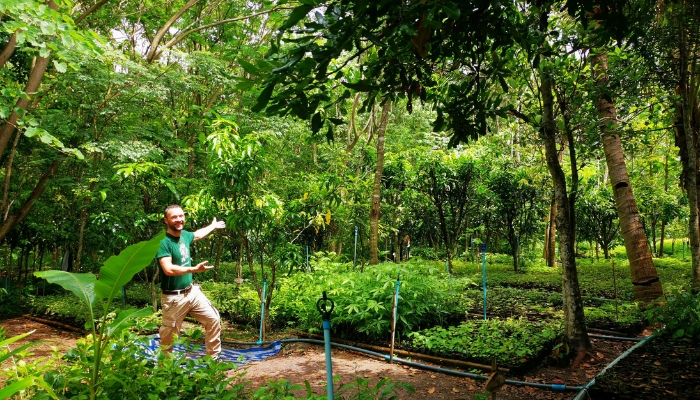
What this looks like in practice is shown by our Food Forest in Ghana: read more about syntropic agroforestry at Click A Tree.
Growing political will
Countries have made new pledges—for rivers and lakes, mangroves, coral reefs, and kelp forests.

Where is more speed still needed?
The ambition is there. Now it is about implementation.
Pledges and implementation
Countries have pledged around 1 billion hectares. A quarter of that has been implemented. To reach the 30% target by 2030, the pace must triple.
Oceans, coasts, and waters
On land, progress is strong. For rivers, lakes, mangroves, and coral reefs, the gap to the target is significantly larger. According to the report, these ecosystems are losing area and quality the fastest.
This is where the biggest opportunity for additional impact lies. That is why, in the Philippines, we remove plastic from the ocean and recycle it into chairs for schools.
Measurability
The report emphasizes: hectares alone tell only half the story. What matters is whether biodiversity, habitats, and nature’s services actually return. That requires reliable data.
And: 30% by 2030 is an interim target. Restored nature needs care over many years.
What role do businesses play?
The report calls for private investment to be scaled up significantly. This is where the greatest growth potential lies.
Today, USD 64 billion per year flows into ecosystem restoration. By 2030, USD 296 billion per year will be needed. That is more than four times as much.
The private sector contributes USD 17 billion, i.e., 27%. More than two thirds of that is legally mandated offset measures. Voluntary corporate investment currently accounts for only a small share.
The good news: with the right model, businesses can reduce costs or increase revenue—while also contributing to nature restoration. That is exactly what Click A Tree enables for hotels, gastronomy, tour operators, and many other industries.
Monitoring as an investment barrier
One detail from the report is particularly relevant for businesses: investors cite the cost of monitoring projects as a major barrier. They want to know what happens to their money. Rightly so.
This is exactly where it becomes clear which partner is the right one.
At Click A Tree, monitoring is already included for partners: GPS coordinates per project, tree species, photos, videos, and updates over many years. In the Impact Dashboard, you can see your impact at any time and receive marketing materials directly to show it to guests, customers, and employees.
Why does nature restoration pay off?
The report calls for a shift: from individual projects to “restoration economies”. This refers to an economy that invests in nature and benefits from it.
The World Bank has identified ten different economic benefits of restoration. These include higher crop yields, lower water treatment costs, and more resilient supply chains.
For us, this has been everyday reality since 2018. Our guiding principle is: Profitable sustainability. Automated. Certified. Real.
Three real-world examples
- Hotel: Best Western Hotel Das Donners in Cuxhaven saves 75% of all stayover cleanings. Guests choose a tree instead of room cleaning during their stay. The hotel relieves its team, saves costs, and plants trees. See the Hotel Das Donners case study.
- Recruiting: A Best Western program plants one tree per application. Result: 12% more applications. This is how application trees in recruiting work.
- Gastronomy: Waldrestaurant St. Ottilien in Freiburg offers a monthly rotating tree dish. Regulars there are affectionately called “the tree eaters”. More than 7,000 trees have already been created this way. See the Waldrestaurant St. Ottilien success recipe.
This is how what the report calls for becomes reality: the economy and nature grow together.
Read more in our guide to profitable sustainability in hotels, in the 7 examples of profitable sustainability in gastronomy, and in our guide reducing housekeeping in hotels.
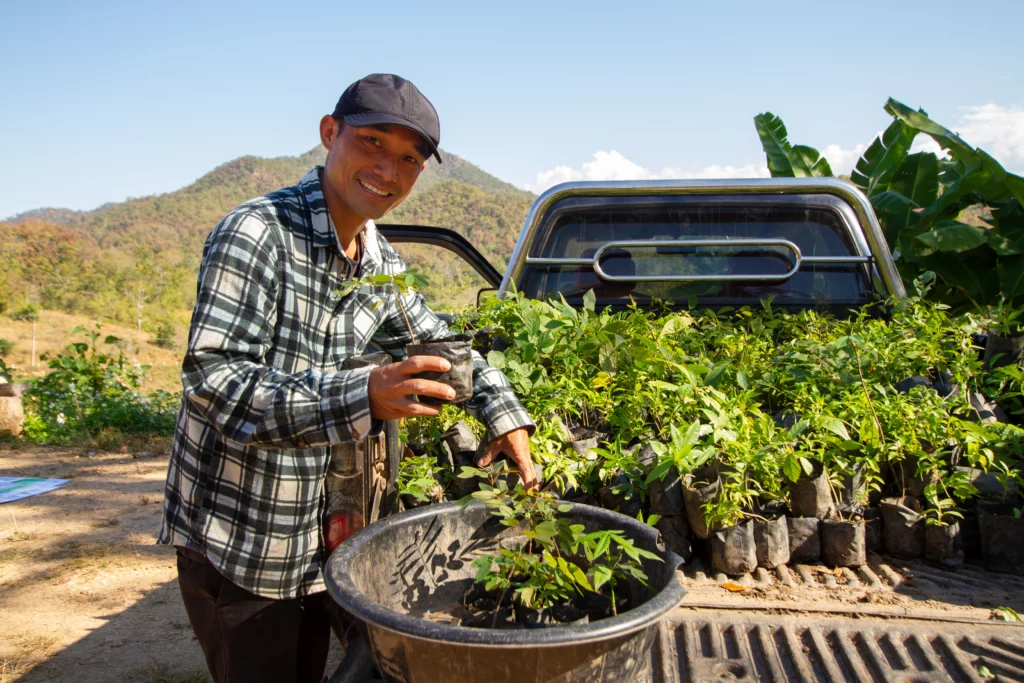
What contribution does Click A Tree make?
Click A Tree has been an official UN partner for ecosystem restoration for years. For the current report, we provided data from our projects.
We are proud to be part of this global movement. And we see our work reflected in many parts of the report:
| Topic in the UN report | How Click A Tree implements it |
|---|---|
| Restoration on land | Over 300,000 trees in Thailand, Ghana, the Philippines, and Germany |
| Oceans and coasts | Plastic from the ocean in the Philippines, recycled into chairs for schools |
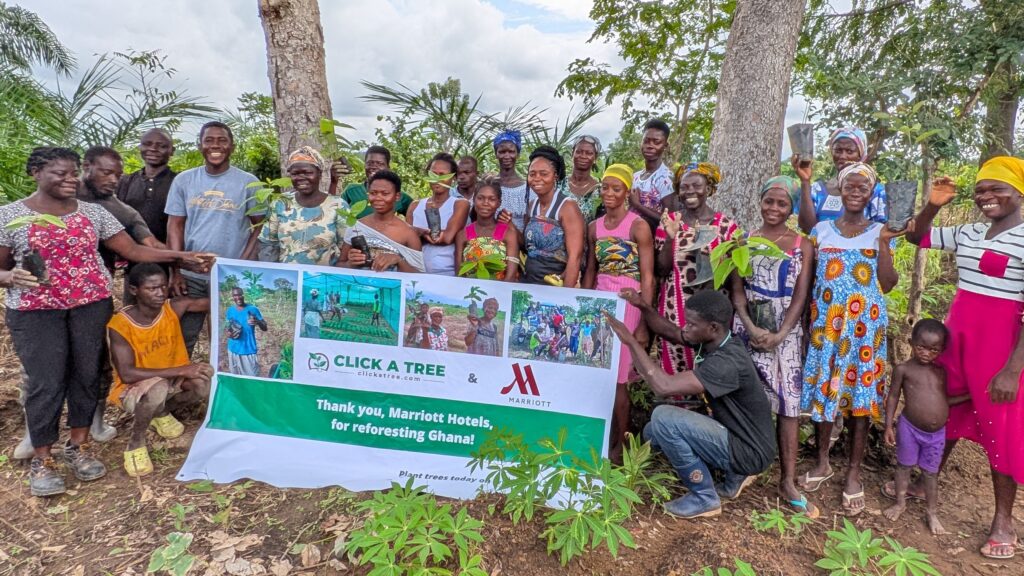
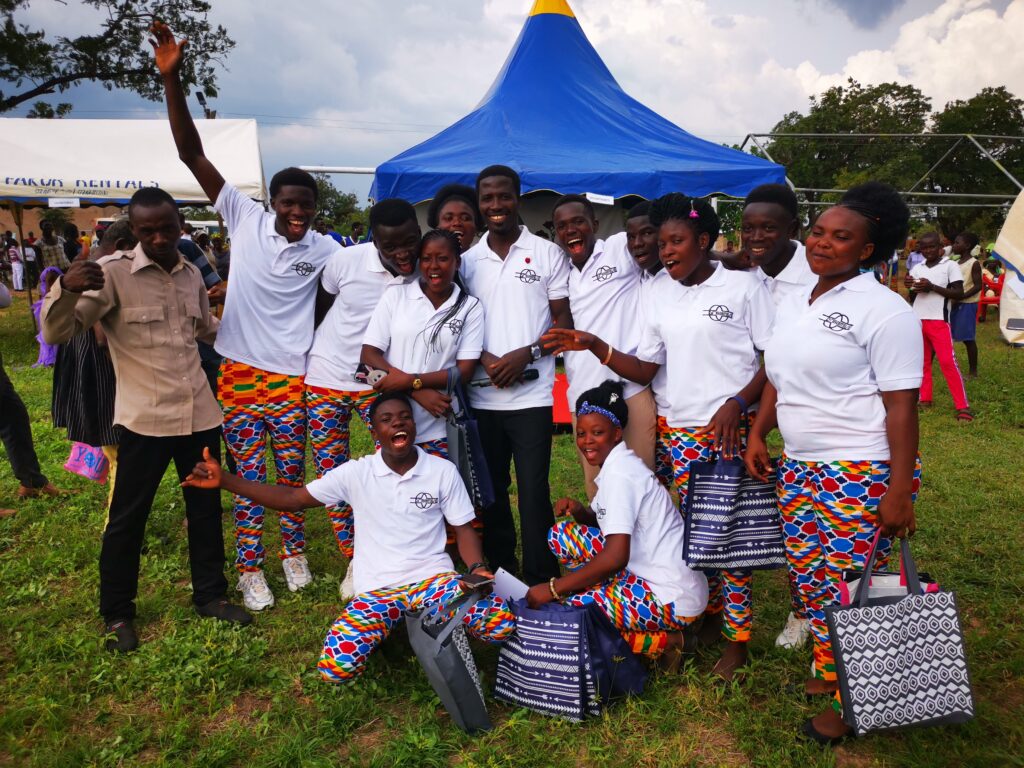
| Green jobs | Fair full-time jobs in the project countries, two entrepreneurship schools in Ghana |
| Agroforestry and food | Food Forest in Ghana with fruit trees such as banana, papaya, and mango |
| Biodiversity | Dozens of different tree species in the project countries create new habitats for animals and plants |
| Transparency and monitoring | GPS coordinates per project, tree species, photos, and updates over many years |
| Economic benefits | Models that save partners money or generate revenue |
What can your business do in practical terms?
The simplest way to get started: link one tree to a process that already happens in your business every day. That way, your impact grows automatically with your business.
| Industry | Tree per… | Your benefit |
|---|---|---|
| Hotel | Waiving stayover cleaning, booking, or loyalty point | lower cleaning costs, guest loyalty |
| Gastronomy | Tree dish on the menu | regulars, stories for press and social media |
| Tour operator | Trip, as a component of the travel price | commission, customer loyalty |
| E-commerce | Order, as an upsell at checkout | higher basket value, customer loyalty |
| Events and trade fairs | Attendee or business card at the booth | more leads, positive brand experience |
| Real estate and construction | Square meter of living space | habitat for animals as a sales argument |
| HR | Application | more applications, strong employer brand |
You can find more examples by industry in our case studies and impact solutions for businesses.
Nature is coming back. With your business, it can come back even faster. #justdoit
Is Click A Tree the right choice for your business?
That is for you to decide. These facts help you decide:
- B Corp certified: independently audited standards for environmental, social, and governance performance.
- Official UN partner for ecosystem restoration.
- All 17 UN Sustainable Development Goals are addressed through the projects.
- Several hundred partners, primarily from hospitality and tourism, including Best Western, Marriott, Allianz, Ernst & Young, and ITB Berlin.
- From €5 net per tree in the tropics, €15 net in Germany.
The world has a realistic chance to bring nature back. Businesses can significantly accelerate this path—and benefit themselves.
Try it for yourself. In 15 minutes, we will show you what this could look like in your business.
FAQ on the UN Report 2026
Here you will find answers to the most frequently asked questions about the Restoration Progress Report 2026.
If your question is missing, contact us.
How much area is being restored worldwide?
According to the UN Report 2026, around 252 million hectares are under restoration worldwide. That is more than seven times the size of Germany and the largest documented effort to date.
What is the UN Decade on Ecosystem Restoration?
The UN Decade runs from 2021 to 2030. Its aim is to stop and reverse ecosystem destruction worldwide. It is coordinated by UNEP and FAO.
Is the world on track for 2030?
On a good path, with room for improvement. Countries have pledged around 1 billion hectares, and a quarter has been implemented. According to the report, the pace must triple.
How much money is flowing into nature restoration?
Currently around USD 64 billion per year. By 2030, USD 296 billion per year will be needed, according to the report. Businesses currently contribute 27%.
How many jobs are created through ecosystem restoration?
The UN flagship projects are associated with over 1 million green jobs. By 2030, more than 32 million new jobs are possible, according to the report.
How can businesses contribute to ecosystem restoration?
Most effectively through models that also make economic sense. One example: with Click A Tree, hotels plant a tree instead of room cleaning during the stay—saving cleaning costs. Learn more: profitable sustainability in hotels.
Did Click A Tree contribute to the UN report?
Yes. As an official UN partner, Click A Tree provided data from its projects for the report.
Source
FAO, UNEP and SCBD. 2026. Restoration progress report: Nature’s comeback. Scaling ecosystem restoration for people and planet. Rome. View the report
About the author
Chris Kaiser is Founder and CEO of Click A Tree. Raised in Cameroon and Tanzania, he came to the idea of making environmental protection economically attractive for businesses via the tourism industry and several years in Thailand. Known from “Die Höhle der Löwen”, Stern, and Wirtschaftswoche.
Share this article with your network